Helena Schrader's Historical Fiction

For a complete list of my books and awards see: http://helenapschrader.com

For readers tired of clichés and cartoons, award-winning novelist Helena P. Schrader offers nuanced insight into historical events and figures based on sound research and an understanding of human nature. Her complex and engaging characters bring history back to life as a means to better understand ourselves.

Showing posts with label Richard the Lionheart. Show all posts

Sunday, April 2, 2017

Writing Biographical Fiction – Richard the Lionheart


Richard the Lionheart plays a central role in Envoy of Jerusalem, and he is without doubt the one character that every reader has at least heard of. Indeed, most readers probably already have an opinion about Richard before opening the first page of my book, because Richard the Lionheart’s popularity in popular culture goes back at least to the time of the first Robin Hood legends – whenever that was! Today he is familiar from scores of Hollywood films and hundreds of novels. So I knew from the start that readers would come to my book with a picture of him already in their minds.

To make things even more difficult, Richard was highly controversial even in his own lifetime. He was seen by the Church as excessively proud, greedy and sexual. He was detested by the German Emperor, his own brother John, and the French King. On the other hand, he was adored by his hard-headed, practical and highly political mother -- and by his troops. Furthermore, despite the best efforts of his brother John and the King of France, he retained the loyalty of most of his vassals and subjects as well.


To this day historians and laymen tend to fall into “pro” or “con” camps. It seems as if people just can’t be indifferent to Richard.  The main sources of contemporary contention are: 1) whether Richard was a “good” or a “bad” king for England; 2) whether Richard was homosexual or not; 3) whether Richard was a stupid, bloodthirsty brute or an intelligent and judicious king and commander. Since my novel is set exclusively in the Holy Land, the first question isn’t terribly relevant, but answering the latter two, particularly the last, was important. So before writing anything, I tried to find answers to these questions and come to a personal understanding of this complex and controversial king. As a second step, I then reflected on how the man I “discovered” would have interacted with my characters.

Richard, it seems to me, was a product of his age, birth and upbringing. Born a prince to two of the most ambitious, politically savvy, proud and passionate people of the 12th century, Richard had little chance of being humble, meek, dispassionate, indecisive, or easy-going. Richard and his brothers fought their father and each other as well as their liege lord Philip II and any rebellious vassal that dared raise his head. Clearly, Richard was ambitious, aggressive and tenacious, but his heritage also ensured that he was politically astute and acutely attuned to shifting alliances and power constellations.


Richard was, furthermore, only 13 when he was first invested with authority as Duke of Aquitaine. While children in the Middle Ages undoubtedly grew up faster than children do today, that is still a very young age to be raised to such high status. It is hard to imagine that the dignity, power and importance of this title did not go to his head. So Richard would never have been humble or self-effacing, but he was also unlikely to have been touchy about his titles. They were not something new or something he had to guard consciously because by the time he came on crusade they were an organic part of him.

Another thing that struck me was that Richard’s relationship with his father was far more complex than that of an impudent son, but while fascinating this wasn’t all that relevant to my novel. Richard’s deep love for his mother, on the other hand, was relevant because it must have influenced his attitude toward women generally ― and sexual relations are important in any novel. Richard’s relationship with his mother was forged when he was at her court in Poitiers from the ages of nine to thirteen. He surrendered the Aquitaine to her and her alone, trusting her not to give it to one of his brothers. His very first act as king was to order her release from detention. He sought her advice when he was with her and entrusted her with royal authority during his absence. Arguably there was no other human being that he trusted as much as he trusted his mother. A man who has that much respect for a woman’s intelligence and political acumen is bound to respect other intelligent women, and this was an important insight for my novel as it dictated how Richard would react to and inter-act with my female protagonist, Maria Comnena.


At the same time, Richard was anything but a “mama’s boy.” He was strong, athletic, and comradely. He won the affection of his troops because he could swear, fight and whore as hard as they did. Indeed, the Church was highly critical of his sexual excesses. It has become popular to impute homosexuality to Richard, but there is no evidence that he was suspected of this in his lifetime. Certainly, he had mistresses and at least one illegitimate son, so if he was also a practicing homosexual he was bi-sexual. We will probably never know what his sexual preferences were and, frankly, I don’t much care. In my novel I chose to stick to the contemporary image of Richard as heterosexual.


What did strike me as exceptional, however, was his willingness to do manual labor. This was anything but self-evident in a medieval nobleman, much less a king. Yet the Itinerarium Peregrinorum et Gesta Regis Ricardi claims that Richard helped rebuild the defenses of Ascalon “with his own hands,” and describes his example inspiring everyone to work together handing the stones up to the wall (Book 5, Chapter 6). The willingness to do menial labor reveals just how sure Richard felt in his own skin. He was so sure of his own innate nobility that he had no need for royal symbols or ceremony. It was perhaps this that later enabled him to endure captivity at the hands of the Holy Roman Emperor. For my novel it was simply an important characteristic.


I was also won over by Richard’s leadership style. Richard was a brilliant strategist – who also led from the front. He risked his own life, but was very cautious with the lives of his soldiers. He understood logistics as well as strategy, and he won his battles with a combination of careful planning and sheer audacity. As one of my readers put it, in the end, I just had to love Richard.


For the most part, therefore, “my” Richard reflects the above characteristics, but the plot of Envoy of Jerusalem required going beyond this fundamental character and looking specifically at Richard’s role in the Third Crusade. On the one hand this meant his continuous quarreling with the French under Philip II and Hugh of Burgundy, and on the other hand his interaction with the barons of Outremer and his initial support for Guy de Lusignan. With regard to the former, I accepted historical consensus that Richard and Philip’s rivalry and hostility was both a clash of personality and fundamental interests. With the later, however, I had to look deeper as this was the very essence of my novel: the evolving relationship between Richard and Ibelin.


Here too, it was rapidly evident that Richard and Ibelin were in many ways opposites in background and character. Richard was born to privilege; Ibelin had to claw his way up by marriage and merit. Richard was flamboyant and showy; Ibelin was humble and retiring. Richard was renowned for his prowess on the battlefield, a man of immense physical strength and skill with arms; Ibelin’s greatest achievements were diplomatic. Richard led from the front with spectacular displays of bravery; Ibelin’s military skills were more organizational and inspirational.


Yet arguably what most set Richard and Ibelin apart was that Richard was crusader, while Ibelin was a native of Outremer. This simple fact determined their initially opposing attitudes and positions at the start of the Third Crusade. Richard arrived in the Holy Land determined to regain Jerusalem ― and consciously or unconsciously convinced that the men of Outremer had lost it, either through their sins or their incompetence. Richard, like other crusaders from the West, were quick to see the natives of Outremer as decadent and compromised. Ibelin, naturally, placed the blame for the catastrophe on its architect, Guy de Lusignan.

It was Richard’s support for Guy de Lusignan, therefore, that initially put Ibelin and the Plantagenet on a collision course. Ibelin recognized Conrad de Montferrat in place of Guy as the rightful king of Jerusalem. Because of this, he was willing to act as Montferrat’s envoy to Saladin in the fall of 1191. This put him in direct conflict with Richard, because Montferrat was willing to cut a deal with Saladin behind Richard’s back. (Saladin called Montferrat’s bluff, and broke off the negotiations with him, but the fact that Ibelin had represented Montferrat in some (though not all) of these negotiations naturally made him seem a traitor, at least in the eyes of some of Richard's followers and later chroniclers.


Yet less than a year after his arrival in the Holy Land, Richard was forced to recognize that he had seriously misjudged Lusignan. He recognized further that his continued support for the strategist of the disaster at Hattin endangered all that he had achieved with his crusade. It is to Richard’s credit that he both recognized his mistake and was willing to reverse his policy.


After Champagne’s election as King of Jerusalem, Ibelin supported Richard’s crusade. He is specifically named as commanding (again) the rear-guard of the army sent to the relief of Jaffa (after Richard went by ship to stiffen the resistance of the garrison). He is also listed as the first and foremost of the emissaries Richard sent to Saladin to negotiate a truce that would enable Richard to return home to his threatened inheritance. Obviously, this had in part to do with the fact that Ibelin had distinguished himself in negotiations with Saladin before, notably at Jerusalem. Nevertheless, no man selects an envoy he does not trust and respect.


It is therefore safe to say that in the almost exactly 16 months that Richard the Lionheart spent in the Holy Land, he came to appreciate, respect, and possibly even like the so very different Baron of Ibelin. It is this evolving relationship that I describe in Envoy of Jerusalem -- as well as attempting to do justice to the complex historical figure that Richard I Plantagenet undoubtedly was.

Richard the Lionheart is a major character only in "Envoy of Jerusalem"


Friday, November 21, 2014

Interview with Charlene Newcomb

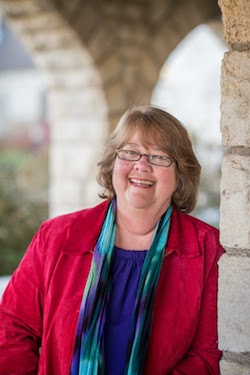
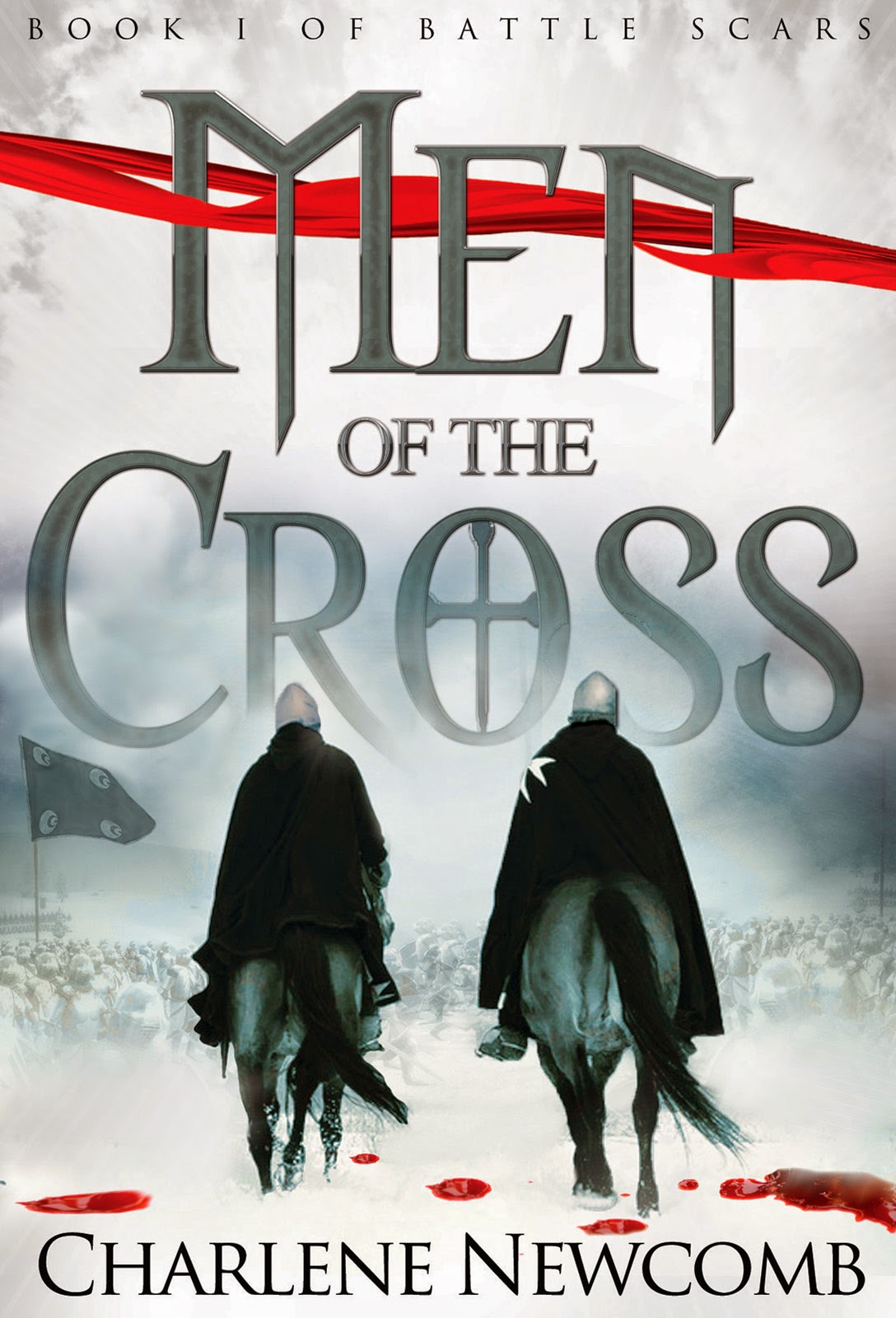
Charlene Newcomb and I have a lot in common when it comes to writing -- both what interests us and what gives us a thrill and sense of accomplishment. Furthermore, Char was recently named a B.R.A.G. Medallion honoree for Men of the Cross http://www.bragmedallion.com/medallion-honorees/2014-brag-medallion-books/men-of-the-cross-battle-scars  So, I'm very pleased to have her answer some questions about herself and her latest book, Men of the Cross, set in the Third Crusade.


Did you want to be an author when you were younger?

My creative energies focused on music when I was young - piano, guitar, rock band. I had casts of characters and story ideas in my head but only committed anything to paper when demanded by English classes. One of those was an alternative historical where the Confederacy had won the Civil War. I didn’t pick up the pen seriously until many years later when I had a number of short stories published in the Star Wars Adventure Journal, a role-playing game magazine licensed by Lucasfilm, Ltd.

I know you have a degree in US History, but you didn’t go to college immediately after graduating from high school. What prompted you to join the Navy? Did your time in military service influence your writing?

I convinced my father to take me to the recruiters office when I was in the 9th grade (around age 14 for your international readers). I’m certain my parents and the recruiters thought it was passing fancy. I wanted a break from school and studies. I loved travel, was interested in learning other languages, and had a patriotic streak. (Shades of my main character Henry de Grey from Men of the Cross? Probably!) “Join the Navy and see the world” sounded like an excellent way to fulfill those dreams. I took the oath at 18 and shipped out to Florida for boot camp. Unfortunately, the “world” wasn’t part of my Naval career. All my training and jobs were stateside, but my experience as a communications technician/voice language analyst did infiltrate my earliest science fiction short stories, which were filled with spies and underground freedom fighters.

With that US History degree, why aren’t you writing historicals set in the United States?
A story set during the Revolutionary War has been on my “to-write” list for as long as I’ve been writing. I’ve mapped out significant plots points, have names for two main characters, and know the opening scenes, but my history degree barely touches on the depth of information I’ll need to write that novel. Life and research for my current book series take most of my time right now.


What prompted you to write a novel about the Third Crusade?


My interest in the Third Crusade was piqued by episodes of the BBC television series Robin Hood that featured Richard the Lionheart. The show may have been filled with historical anachronisms, but the images of war’s impact on young men - what we would call PTSD - and the characters’ loyalty to the king and to each other were powerful. Ever since childhood, I’ve been driven to learn more about subjects that interest me. I dove into translations of primary sources of the crusade and books on the life and times of Richard I. I have the perfect day job to fill that curiosity and research need: I work in a large university library.

You are working on Book 2 of Battle Scars. How long did it take you to write Men of the Cross, and how is progress on the second book coming along?

Men of the Cross began its life as a short story I penned in 2009. I intrigued my critique partners in those ten pages with two knights recently returned from serving Richard the Lionheart in Outremer. How did these men end up defending the Kentish coast in early 1193? Because I was working on another book, I didn’t start writing Men of the Cross until early 2012. The short story became the ending of the novel. While awaiting final editorial comments on Book 1, I completed a rough draft of Book 2, For King and Country. I am revising the last few chapters now. With luck, I’ll begin begin round two of edits by January and then ship the manuscript to beta readers.

Did you uncover any surprising historical persons, places, events or things in your research?

Contemporary chroniclers brought events to life. There were times I felt like I was reading fiction rather than an historical diary of everyday events in the lives of the men marching towards Jerusalem. The conditions of the march, the weather, how these men survived (or not). The tapestry of their lives and times fills me with incredible respect, and downright awe. On a lighter note, I learned that it can snow in Jerusalem. I guess it is like Kansas - until you’ve been here, you only have a perception in your mind of what it is like based on television, movies, or the news. Everyone remembers flat farmland and tornadoes from Wizard of Oz, when in reality, the northeast part of the state has beautiful rolling hills and gorgeous prairie. I can imagine wagon trains and buffalo as I drive along the I-70 corridor towards Kansas City. And though I haven’t traveled to Israel, I did experience it with King Richard’s army through the chroniclers.

Why should we read this book?  
Men of the Cross is a story of loyalty, friendship and love during wartime. It is the human drama against actual historical events as seen through the eyes of two knights. One is a young, naive, and devout Christian: Henry is gung-ho, ready to take up arms in the name of God. Stephan is only two years older, but he has been fighting at Richard’s side for five years. Stephan’s loyalty to Richard is what drives him. He follows his king on crusade and has little regard for the Church. If you like a bit of adventure and humor with your historical fiction this may be the book for you.

What are some of the complications in the book?
The harsh brutalities of war - moving armies thousands of miles - the politics of Richard, Philip of France, Leopold of Austria, the Holy Roman Emperor - Saladin’s tactics - questioning beliefs taught about the Church, about life, about love - post-traumatic stress syndrome - same-sex relationships.

In your author’s note, you write: “Though one of the underlying themes of Battle Scars is the relationship between Henry and Stephan, I do not refer to the question of King Richard’s homosexuality.” When I saw blurbs about your book my question was simply: Why did you choose homosexual heroes in an age where homosexuality was viewed as far more damning (literally) than fornication and adultery etc.? It certainly was not "accepted" and viewed as normal! Particularly, why the homosexual angle now that historians have debunked inference, popular 50 years ago, about Richard I being homosexual?

Let me start with your last question first. I’d read many articles, primary sources, and biographies of Richard, and agree that evidence cited previously was circumspect. Because Men of the Cross features a gay main character, I mentioned the accusations about Richard to show I’d done my research and because some readers may only have a movie like The Lion in Winter for reference.

Numerous scholars note that attitudes about and punishment for homosexuality varied tremendously despite the stance of the Church in the 12th century. (I provide more background on the topic in a recent post here: http://wp.me/p22qZn-Nx.) The two main themes of Men of the Cross are the effects of war on a young knight and the comraderie and friendship, and ultimately love, that develops between two men. The story relates the human angle, recognizing homosexuality as part of the human condition. Certainly, “forbidden” love provides tremendous conflict. I could have written about a “forbidden” male/female relationship - any sex outside of marriage would have been a mortal sin. (And there was plenty of sinning going on given the number of illegimate children born to the nobility and the clergy!) But that story didn’t speak to me. Men of the Cross lets me dive into Henry’s inner turmoil as he questions his beliefs. Stephan readily admits his preference for men, but has never known or expected love. It is self-discovery for both men as their friendship deepens.

Does the book have any homo-erotic scenes?

The novel is not erotica. Men of the Cross is about the relationship, not about the sex. Like many novels, there is sexual tension and attraction. Yes, there are a few sex scenes. I'd call them emotionally charged. A friend called one “steamy.” There are tender and sometimes passionate touches, kisses, and a sense of intimacy and sensuality without being too graphic. I am a big believer in fade-to-black. The readers’ imagination can fill in the details.

Do you have a favorite scene from Men of the Cross? Which one & why?

Henry is profoundly affected when he witnesses the execution of 2,700 prisoners in Acre, one of the ugly blemishes of Richard the Lionheart’s history. After the crusaders fight off Saladin’s troops, Henry disappears. Stephan finds him bruised and bloodied at the waterfront. The scene shows Henry’s frailty and Stephan’s compassion, and to me, it is one of the most emotional scenes in the novel. Henry’s innocence lost. Stephan's helplessness.

Your book blurb mentions the ‘seeds of a new Robin Hood legend.’ Seeds?

Men of the Cross includes an origin story for Robin Hood - barely. I introduce a knight named Robin who is extraordinarily skilled with bow, and who left a girl back home named Marian. Allan and Little John are minor characters, young teenaged camp-followers, who are taken under the knights’ wings. I hope the reader sees how their lives and actions move them towards that ‘rob from the rich, give to the poor’ attitude, especially as their story arcs are developed further in Book 2. But don’t expect to see them outlawed and living in the greenwood at the end of Book 2.

What part of novel writing do you enjoy the most?

I love to imagine being in far away places and times, trying to visualize what my characters see, think, and feel. I love when a character surprises me, and takes me down a path I wasn’t expecting. Seeing words added to the blank page (or screen) is an exhilarating feeling, but hearing a chuckle or seeing that I tugged a heartstring when I share my work with my writing group and other readers is priceless.

BIO/LINKS

Find Char on her website, http://charlenenewcomb.com, on Facebook, and Twitter. Men of the Cross, is available in print and for Kindle on Amazon sites worldwide, for Nook via Barnes & Noble, and on Smashwords.