Helena Schrader's Historical Fiction

For a complete list of my books and awards see: http://helenapschrader.com

For readers tired of clichés and cartoons, award-winning novelist Helena P. Schrader offers nuanced insight into historical events and figures based on sound research and an understanding of human nature. Her complex and engaging characters bring history back to life as a means to better understand ourselves.

Showing posts with label Philip IV of France. Show all posts

Monday, May 12, 2025

Pope Clement V

 Philip IV of France would not have found it so easy to destroy the Knights Templar if the pope of the period had been a strong character interested either in righteousness -- or his own independence and power. Whether idealistic or merely self-interested, a man with backbone could have stood up to Philip IV -- and turned the Templars into his army. Clement V, however, was a Frenchman with an apparent admiration for Philip IV. Very probably he owed his election to the papacy to Philip and thereafter lived in fear of displeasing the powerful French monarch. 

 In the excerpt below, Lord Geoffrey of Najac, at the end of an audience with the Pope on another topic, raises the issue of the Templars.

 “Is that all, Monsieur?” the Pope enquired of Geoffrey.

“No.” Geoffrey surprised them all — not least Louis and Marie, who had been prepared for everything up to now. “Your Holiness, I was myself a Templar novice, and I fought beside Saint Louis in Egypt. At Damietta, I was wounded and at Mansourah, I was knighted by Saint Louis himself.” He thrust his leg forwards and indicated the spurs with the lilies of France. “I did not join the Temple, but I fought and lived with hundreds of Templars. I am convinced that the charges against them are groundless...." The room was deathly still, and Geoffrey could sense that he had managed to move most of the men around him.

“It is...” the Pope started rather hesitantly, “certainly possible that the ... poison of heresy, sodomy and corruption has not yet spread across the Channel or the Pyrenees. But am I to believe that all the hundreds of confessions — including that of the senior officers of the Temple —are all lies?”

“I can remember the feel of Greek fire upon my skin, Your Holiness, and I know that I would have said anything to make the burning stop. Anything!” Geoffrey stressed. He was staring straight at the Pope, their eyes fixed on one another and the rest of the room was forgotten.

“Leave us!” the Pope ordered abruptly, sitting up and gesturing irritably to all the cardinals, bishops and abbots.

“Your Holiness —” Father Elion tried to intervene.

“Especially you, Father!” Clement hissed.

Geoffrey turned to Louis and gestured for him to withdraw as well. Muttering and whispering, they all withdrew through one of the various doors until the Pope and Geoffrey were utterly alone. The Pope then gestured for him to come closer.

Geoffrey mounted the first two steps of the papal throne and waited. He was separated from Clement by no more than a yard. He could see that the Pope wore white powder on his face and a touch of rouge. He smelled of sweet bath water. He remembered that this was a man who openly kept a mistress, a noblewoman thirty years younger than himself.

“Monsieur de Preuthune,” Clement opened slowly, “you are a courageous man. You fought against the Saracen for your faith—"

“As did the Knights Templar for nearly two hundred years!” Geoffrey’s fervour combined with the unexpected hope that he might be able to influence this weak man made him forget himself. Ardently he argued, “I was trained in the Temple, Your Holiness. More God-fearing and devout men cannot have been born. They abhorred greed and vanity and simple pleasures and devoted themselves only to the service of God. It is impossible that these charges of heresy and idol worship are anything more than false accusations designed to discredit them.”

The Pope scowled and lifted his hand in startled reproach. He had not expected the same impudence from this nobleman he had had to suffer from the King and his ministers. Geoffrey bit his tongue. “As we were saying, you fought against the Saracen for the sake of your faith, and we know that the Saracens outnumbered the army of Saint Louis many, many times. You are undoubtedly courageous,” the Pope conceded. Geoffrey sensed, however, that this was not entirely a compliment. Clement continued, “You are also a man of simple, straightforward faith. A man of the sword, you are not used to intrigue and the need for discretion. So let us help you, my son.” He paused, looked Geoffrey straight in the eye, and then said slowly and deliberately. “You are a subject of the King of France, and if you do not wish to hang for treason, then you would do well to forget your Templar past.”

Geoffrey could not tell if he were being warned or threatened.

The Pope leaned towards him and whispered. “We too are in great danger. We are the King’s prisoner. The King would not hesitate to charge us with the same crimes as the Templars as he did our predecessor. We are powerless against him. Neither excommunication nor any other spiritual sanction impresses him. Do you think we haven’t tried? Haven’t you noticed how the city swarms with his soldiers?” Since the arrival of the King in Poitiers, Pope Clement lived in daily fear of kidnapping or outright murder. Hadn’t Nogaret seized another Boniface VIII by force and driven him to an early grave? Probably with poison.

Geoffrey saw the fear in the Pope’s eyes and the trembling of his thin hands. This self-indulgent, frightened old man was supposed to be Christ’s vicar? Geoffrey’s disbelief gave way to contempt. This old man cared only for his own survival — and his comfort and the trappings of power. He was not even willing to fight for the substance of his authority. He was prepared to live a sham. He would be content as long as all his creature comforts were met and people pretended to respect him.

Geoffrey chose his words with deliberation, and he spoke softly but distinctly, his eyes fixed on the watery, pale eyes of the Pontiff, “If you had not allowed the King to arrest all the Knights Templar in this kingdom, you could have called upon an army!”

The Pope recoiled. His pointed nose was running and a drop of water hung between the nostrils. “What —"

“The Templars owed their allegiance to no king, only to you. You could have surrounded yourself with the best-trained knights in Christendom, and then you could have challenged Philip — or any king — to any test of strength you liked. They would have died for you, Your Holiness, with the same elan and devotion with which they died for Jerusalem and Acre. You could have made kings dance to your tune or set them aside — instead of letting them treat you like a pawn.”

Clement had gone pale as he stared at Geoffrey. Hastily, he brushed the drop from his nose with the back of his gloved hand and looked away. He swallowed. Geoffrey could see the Adam’s apple bobbing in his scrawny throat.

“With your permission,” Geoffrey said coldly, and he backed off the dais.

“Wait!” Clement cried, and Geoffrey waited, but it was too late. They both knew it was too late.

The Pope swallowed and wiped again at his running nose. Finally, he muttered in a tone of defeat, “Go with God.” Clement hastily gave a hint of blessing, and Geoffrey made a suggestion of a bow. Then he turned his back on the frightened man occupying the Shoes of the Fisherman and strode out of the audience chamber.

The Tale of the English Templar is available in paperback and ebook format from all major online retail platforms.


An escaped Templar, an intrepid, old crusader, and a discarded bride
embark on a quest for justice in the face of tyranny. 


Friday, January 16, 2015

Black Friday, October 13, 1307 - An Excerpt from "The English Templar"


The crash that came from the courtyard made Percy fling off his blankets and grab his aketon. He could hear shouting, the imperative yelling of men giving orders, the thudding of numerous hooves on frozen ground, the pounding of boots on wooden stairs, the clunk of doors being flung open. He pulled his aketon over his head and tightened the laces at the throat.

Men were bursting into the dormitory. By the light of the two candles, Percy could see that they wore round “kettle” helmets over mail coifs and that they held naked swords in their hands.

Percy dragged his hauberk and surcoat together over his head even as the armed men were roughly kicking the serving brothers awake and herding the startled, bewildered men together.

Sergeant Gautier was on his feet and limping forwards in his underwear, calling out, “What is this? Who are you? What do you want?”

“You are all arrested in the name of His Grace King Philip IV of France!”

While some of the serving brother broke into a jumble of confused exclamations of disbelief, Brother Gautier protested in a raised, somewhat hysterical voice, “Why? On what charge?”

The thought that these simple brothers could have done anything to offend the crown of France was so absurd that Percy instantly dismissed the claim as either a mistake or a ruse. Philip of France could hardly know that St. Pierre du Temple existed. The Temple was, in any case, not subordinate to any king and owed Philip neither taxes nor obedience. Percy knew, however, that he no longer had time for his mail leggings and reached instead for his sword.

There came a shout, the sound of someone running and then he was tackled from behind and flung onto to pallet, pinned down by the weight of his assailant on his back. Even as he rammed his elbows backwards agains this attacker, he saw a foot kick out and send his sword skittering across the flagstone floor out of reach. Another man had joined the first on his back, pressing his knee into Percy’s spine. Another had hold of the back of his neck in a powerful grip and forced his face down into the blankets, nearly suffocating him. Someone was wrenching his arms behind his back and tying his wrists together. Percy knew when he was defeated since that too was something a good soldier learned to recognize and he stopped struggly instantly. The pressure on his spine and head eased at once. The men backed off, pulling him to his feet.

He looked over his shoulder and saw that the men holding him were indeed wearing the livery of the King of France. It was ridiculous! What could they possibly hope to gain by a breach with the pope? Did Philip of France want to start a feud with Clement V to match the one he had had with Boniface VIII? Weak as Clement was said to be, even he would not tolerate such a flagrant affront to his authority.

The King’s men were already herding the bewildered serving brothers and the priest down the stairs to the courtyard. One old man kept asking is brothers what was happening while Gaston kept looking anxiously over his shoulder to see what had happened to Percy. Serfs by birth, they had been born to docility and as monks they had vowed obedience. Such me, Percy told himself, could not be expected to distinguish between lawful and unlawful authority.

Brother Gautier alone was protesting to the captain in charge. He insisted that he and his brothers were innocent of all wrongdoing. Not one day in their lived had they ever been anything but loyal subjects of the king, he assured the king’s representative in a shaky, strained voice. Terror was written on the aged sergeant’s face and Percy felt sorry for him. Evidently, he was so frightened he had forgotten that the Temple was subordinate to the pope alone.

“It’s not for me to judge your guilt or innocence,” the royal officer told Brother Gautier matter-of-factly. “I have my orders. Take it up with the sheriff.” He was relieved that his mission had gone so well. The orders to attack a house of the Knights Templar and arrest all those within had made him break out in a cold sweat just six hours ago. He had been raised on legends of Templars defending their castles against tens of thousands of Saracens, their small bands matching great armies, their rescue of King Louis II from destruction, their heroic defense of Acre. The captain knew that they were not allowed to withdraw unless the enemy had more than a three-to-one superiority, and he could not know how many men they had in Saint Pierre — which was why he’d mustered his entire company of nearly fifty men. In the event, it was almost ludicrous how easy it had been, he thought shaking his head.

“You can be sure that we will take this up with the sheriff — and the pope! Someone — you, your sheriff or King Philip himself — has overstepped his authority.”

Percy’s voice drew the captain’s attention and he looked up startled at the man held by two of his subordinates.  He took in the chain mail hauberk, the muscular shoulders and thighs and drew the right conclusion. This man was a knight. “Are you the commander, sir?”

“No, I am the commander. This is just a poor traveler. Here for a single night. Whatever crimes we have been unjustly accused of, they cannot apply to him.” Brother Gautier spoke before Percy could get a word out.

The captain looked from Brother Gautier to Percy somewhat uncertainly.

“I am an Englishman, Sir Percy de Lacy of the commandery at Limassol on Cyprus, en route from Poitiers to Limassol,’ Percy confirmed. “And you have no business arresting any Templar since we are subordinate to one but our own officers and the pope himself.”

The arrogance of Percy’s tone angered the captain and he took refuge in the certainties of life: “I have my orders and they were to arrest everyone inside this house. I don’t give a damn if you are a bloody Englishman or the pope himself!”

…

They turned into the narrow alley leading to the city jail [of Albi]. Percy felt a shock go through his body as he saw that two wagons similar to the one behind him already waited there. Had they made raids on more than one commandery? In a single night? Of course in the same  night, he told himself, otherwise there would be no element of surprise. If was standard police tactics, but the increased pounding of his heard could not be calmed.

They stopped and at once someone came and untied his feet. The pain in his ankles as he moved them again was not insignificant but he was too proud to let it show. He leaned forward at once and vaulted to the ground. He had underestimated the impact of a night tied to the back of a horse. His feet were numb and he lost his footing at once. He staggered and, without his hands free to balance him, fell to the ground — to the general gratification and laughter of the guard. He flushed in embarrassment and anger, but also managed to get his knees under him and right himself. Meanwhile, the other prisoners from Saint Pierre were being pushed off the back of the wagon and into the jail.

As Percy was pushed past the porter of the jail, he turned and addressed the old man. “I demand to see the sheriff and a representative of the Bishop of Albi,” Percy protested.

“Oh, you’ll have ample opportunity to get to know the sheriff,” came the answer in a sneering voice. And then something particularly curious happened. The called him “an ass-fucking heretic!” and spat after him.

Percy had not recovered from the shock of such an uncalled –for and perverse insult when he found himself at the entrance to the public jail. Before him, spread upon the stale straw, with chains around their feet or chained directly to moldy walls were over one hundred Templars. It took his breath away. 


The English Templar is available for sale here.

Saturday, October 20, 2012

Friday the 13th and the Destruction of the Knights Templar

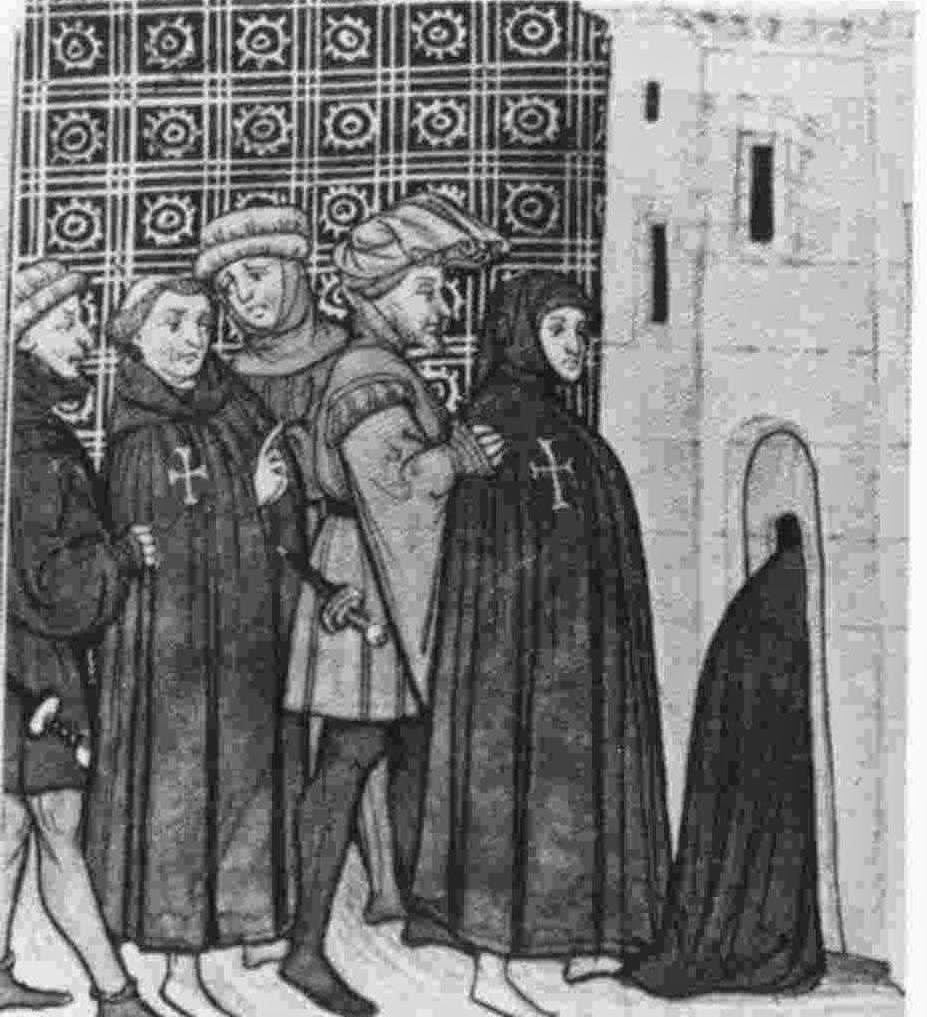
On the night of Friday, October 13th, 1307, the forces of King Philip IV of France carried out a surprise attack upon all Templar Commanderies across France, breaking in, arresting and seizing the assets of the Knights Templar. In the days to follow, the Knight's Templar were charged with the usual crimes of heresy and sodomy -- allegations that the French crown routinely raised against individuals and institutions that were not completely submissive or had substantial private assets that the French king wanted for his treasury. In the years to follow mock trials, wholesale torture of prisoners, and ultimately the burning alive of hundreds of innocent men followed in what was one of the worst know cases of brutal tyranny in the western world. 

Although some, particularly wealthier, elements in society appear to welcomed the humiliation of a mighty and haughty institution, and some of the poor and ignorant may have believed the ridiculous allegations of sorcery and devil worship, as time passed and the extent of the French king's greed, the refusal of brutally tortured men to "confess" -- even under the threat of being burned alive -- gradually convinced the majority of people that the Knights Templar were largely innocent victims of the French king's greed. 

Gradually, in the popular mind, Friday the 13th (of October 1307) was remembered as day in which forces of evil had pounced upon unsuspecting good Christians, utterly destroying them despite their faith.  As the memory of the actual event faded, the association of Friday the 13th with something unnaturally evil and threatening remained.  This is the origin of the superstition about Friday the 13th right up into the 20th Century -- 700 years after the destruction of the Knights Templar.

Although I'm a week late, I'd like to remind readers of the event with the following short excerpt from The English Templar, which describes that Friday the 13th through the eyes of the novel's hero:

The crash that came from the courtyard made Percy fling off his blankets and grab his aketon. Now he could hear more shouting, the imperative yelling of men giving orders, the thudding of numerous hooves on frozen ground, the pounding of boots on wooden stairs, the clunk of doors being flung open. He pulled the aketon over his head and tightened the laces at his throat.

Men were bursting into the dormitory. By the light of the two candles, Percy could see that they wore round 'kettle' helmets over mail coifs and that they had naked swords in their hands.

Percy dragged his hauberk and surcoat together over his head even as the armed men were roughly kicking the serving brothers awake and herding the startled, bewildered men together.

Sergeant Gautier was on his feet and limping forward in his underwear, calling out, "What is this? Who are you? What do you want?"

"You are all arrested in the name of His Grace King Philip IV of France!"

While some of the serving brothers broke into a jumble of confused exclamations of disbelief, Brother Gautier protested in a raised, somewhat hysterical voice, "Why? On what charge?"

The thought that these simple brothers could have done anything to offend the crown of France was so absurd that Percy instantly dismissed the claim as either a mistake or a ruse. Philip of France could hardly know that Saint Pierre du Temple existed. The Temple was, in any case, not subordinate to any king and owed Philip of France neither taxes nor obedience. Percy knew, however, that he no longer had time for his mail leggings and reached instead for his sword.

There was a shout and the sound of someone running and then someone tackled him from behind. He was flung stomach first on to his pallet, pinned down by the weight of his assailant on his back. Even as he rammed his elbows backwards against his attacker, he saw a foot kick out and send his sword skittering across the flagstone floor out of reach. Another man had joined the first on his back, pressing his knee into Percy's spine. Another had hold of the back of his neck in a powerful, muscular grip and forced his face down into the blankets, nearly suffocating him.  Someone was wrenching his arms behind his back and tying his wrists together. Percy knew when he was defeated since that too was something a good soldier learned to recognize, and he stopped struggling instantly. The pressure on his spine and head eased at once. The men backed off him, pulling him to his feet.

He looked over his shoulder and saw that the men holding him were indeed wearing the livery of the king of France. It was ridiculous! What could they possibly hope to gain by a breach with the pope? Did Philip of France want to start a feud with Clement V to match the one he had had with Boniface VIII? Weak as Clement was said to be, even he would surely not tolerate such a flagrant affront to his authority.

The king's men were already herding the bewildered serving brothers and the priest down the stairs to the courtyard. One old man kept asking his brothers what was happening, while Gaston kept looking anxiously over his shoulder to see what had happened to Percy. Serfs by birth, they had been born to docility and as monks they had vowed obedience. Such men, Percy told himself, could not be expected to distinguish between lawful and unlawful authority.

Brother Gautier alone was protesting to the captain in charge. He insisted that he and his brothers were innocent of all wrongdoing. Not one day in their lives had they ever been anything but loyal subjects of the king, he assured the king's representative in a shaky, strained voice. Terror was written on the aged sergeant's face and Percy felt sorry for him. Evidently, he was so frightened that he had forgotten that the Temple was subordinate to the pope alone.

"It's not for me to judge your guilt or innocence," the royal officer told Brother Gautier matter-of-factly. "I have my orders."

"But who gave you the orders? What is the cause of all this? I don't understand," Brother Gautier insisted, wringing his hands.

"Take it up with the sheriff," the royal officer advised indifferently.

The captain was relieved that his mission had gone so well. The orders to attack a house of the Knights Templar and arrest all those within had made him break out in a cold sweat just six hours ago. He had been raised on the legends of Templars defending their castles against tens of thousands of Saracens, their small bands matching great armies, their rescue of King Louis II from destruction, their heroic defense of Acre to the last man. The captain knew that Templars were not allowed to withdraw unless the enemy had more than three-to-one superiority, and he could not know how many men the Templars had at Saint Pierre -- which was why he'd mustered his entire company of fifty men.  In the event, it was almost ludicrous how easy it had been.

Percy's voice drew the captain's attention: "You can be sure that we will take this up with the sheriff -- and the pope! Someone -- you, your sheriff, or King Philip himself -- has overstepped his authority."

The captain looked over startled at the man held by two of his subordinates.  He took in the chainmail hauberk, the muscular shoulders and thighs, and drew the correct conclusion.  This man was a knight. "Are you the commander, sir?"

"No, I am the commander," Brother Gautier spoke before Percy could get a word out, continuing, "this is just a poor traveler. Here for a single night. Whatever crimes we have been unjustly accused of, they cannot apply to him."

The captain looked from Brother Gautier to Percy somewhat uncertainly.

"I am an Englishman, Sir Percy de Lacy, of the Commandery at Limassol on Cyprus, en route from Poitiers to Limassol," Percy confirmed.  "And you have no business arresting any Templar, since we are subordinate to no one but our own officers and the pope himself."

The arrogance of Percy's tone angered the captain and he took refuge in the certainties of life: "I have my orders and they were to arrest everyone inside this house. I don't give a damn if you are a bloody Englishman or the pope himself!"

And he turned his back on the the two remaining Templars and clattered down the stairs to the ward, his men pushing Percy and Brother Gautier before them as they followed him outside.