Helena Schrader's Historical Fiction

For a complete list of my books and awards see: http://helenapschrader.com

For readers tired of clichés and cartoons, award-winning novelist Helena P. Schrader offers nuanced insight into historical events and figures based on sound research and an understanding of human nature. Her complex and engaging characters bring history back to life as a means to better understand ourselves.

Friday, October 8, 2021

The Most Exclusive Club in the World -- The Guinea Pig Club

Speaking of it after the war, the celebrated plastic surgeon Dr. McIndoe claimed: “It has been described as the most exclusive Club in the world, but the entrance fee is something most men would not care to pay and the conditions of membership are arduous in the extreme.” 

The Guinea Pig Club

One of the greatest hazards in flying a in WWII was the risk of fire. The combination of high-octane aviation fuel and incendiary bullets meant that many aircrew burned to death in their aircraft before they could escape. Yet some managed to escape the flames and live — often with first degree burns covering their faces, hands and other parts of their bodies. Crash-landings also sometime resulted in complete disfigurement. In an age when plastic surgery was still in its infancy, reconstructing faces was largely an experimental process. So, the pilots treated by the pioneering and talented New Zealand plastic surgeon Archibald McIndoe called themselves the “Guinea Pigs.” 

Over 600 patients benefited from the then experimental surgery techniques employed by Dr. McIndoe. By the time Dr. McIndoe’s Ward at the Queen Victoria Hospital in East Grinstead closed in 1948, 80% of the patients had been aircrew from Bomber Command and most of the rest aircrew from Fighter Command. Only a handful of patients had been Royal Navy or Army victims of burn or other accidents requiring plastic surgery. It was Battle of Britain pilot Geoffrey Page started the Guinea Pig Club; membership was restricted to those who received Dr McIndoe’s medical care and the staff that worked in his ward.  Another Battle of Britain pilot, Richard Hillary, made McIndoe’s work famous in his wartime classic, The Last Enemy. (Below a photo of Hillary before being shot down in flames on September 3, 1940.)

McIndoe's patients had all sustained such severe injuries as to require a series of operations to reconstruct facial features and replace skin. Skin grafts were taken from other parts of the patient’s body and sewn in place to create eyebrows, eyelids, lips, and ears. Hands also sometimes had to be reconstructed. In one case, Dr. McIndoe created fingers from the bones of the back of the hand. In nearly all cases, skin grafts were required for the hands as well as the face.

Throughout the slow reconstruction process, the risk of infection was great. Furthermore, some grafts simply wouldn’t take, meaning that the operation had to be repeated until it worked. Because operations had to be spaced out to allow the body time to recover between interventions, patients spent many months and sometimes several years in treatment.

In addition to experimenting with medical techniques to treat burns and conduct plastic surgery, McIndoe pioneered methods to treat the psychological impact of such disfiguring injuries. While all severe wounds have a psychological impact on a patient, the loss of one’s face was particularly shattering because human identity is strongly tied to what we see in the mirror.

Battle of Britain ace Bob Doe's face was crushed into his gun-sight during a crash landing, tearing out one eye and ripping off his nose as well as "redesigning" his upper jaw and the right-hand side of his face (as Doe worded it in his memoir). Bob Doe remembered:

I suffered every time I looked in a mirror and was sure that I had been quite handsome. But now, to me, I was unrecognisable. I have found that to some extent, your face creates your character and your character creates your face. Either way, I had changed, and I did not know what I was. [Bob Doe. Fighter Pilot. CCB Aviation Books, 2006, 54.]

Below Doe before the plastic surgery.

 Geoffrey Page describes the following incident:

One of the prettiest girls I’d seen in my life came into the room to help [the matron] with the dressings. Attired in the cool, colourful uniform of a V.A.D. Red Cross nurse, she personified the wounded warrior’s vision of the ideal angel of mercy. Standing beside the dressing trolley assisting the professional nurse, she was unable to hide the expression of horror and loathing that registered on her lovely face at the sight of my scorched flesh. [Geoffrey Page. Shot Down in Flames. Grub Street, 1999, 86.]

Page requested a mirror and was denied it by the matron. She told him bluntly:

“You will be allowed to look in a mirror, Pilot Officer Page, when I see fit to permit it and not before.” [Geoffrey Page, 87.]

After the nurse had left, Page with great difficulty managed to drag himself out of bed and stagger to washbasin beside his bed above which hung a mirror. He writes:

“Tottering in front of the mirror, I squeezed the moisture out of my eyes and surveyed the image in front of me. The shock of the swollen face three times the normal size was almost too great to comprehend…. [Geoffrey Page, 88.]

Below Page before the plastic surgery.

Clearly, McIndoe’s patients were facing exceptional psychological stress — and most of them were hardly out of their teens. He responded by encouraging an informal atmosphere that including barrels of pale ale in the ward. Between treatments, the patients were sent to convalescent homes or allowed to stay with family and friends. They were encouraged to wear their own clothes or service uniform rather than hospital attire, and they were encouraged to be social. That meant going to the pub, the theatre, flicks and nightclubs. While they often encountered pity and horror, some of the local barmaids were up to the challenge. Doe still remembers with affection the barmaid at the local pub, noting in his memoir:

Can you imagine five or six chaps, some of whom were in a ghastly state with severe burns, walking into a large comfortable bar full of people, (who tended to edge away from this frightful sight!) and being greeted by — ‘My darling — how lovely to see you!” and being given a big kiss!  She deserved a medal if anyone did. [Doe, 53]

Yet as time wore on, East Grinstead became so used to the sight of McIndoe’s patients that it was known as “the town that didn’t stare.”

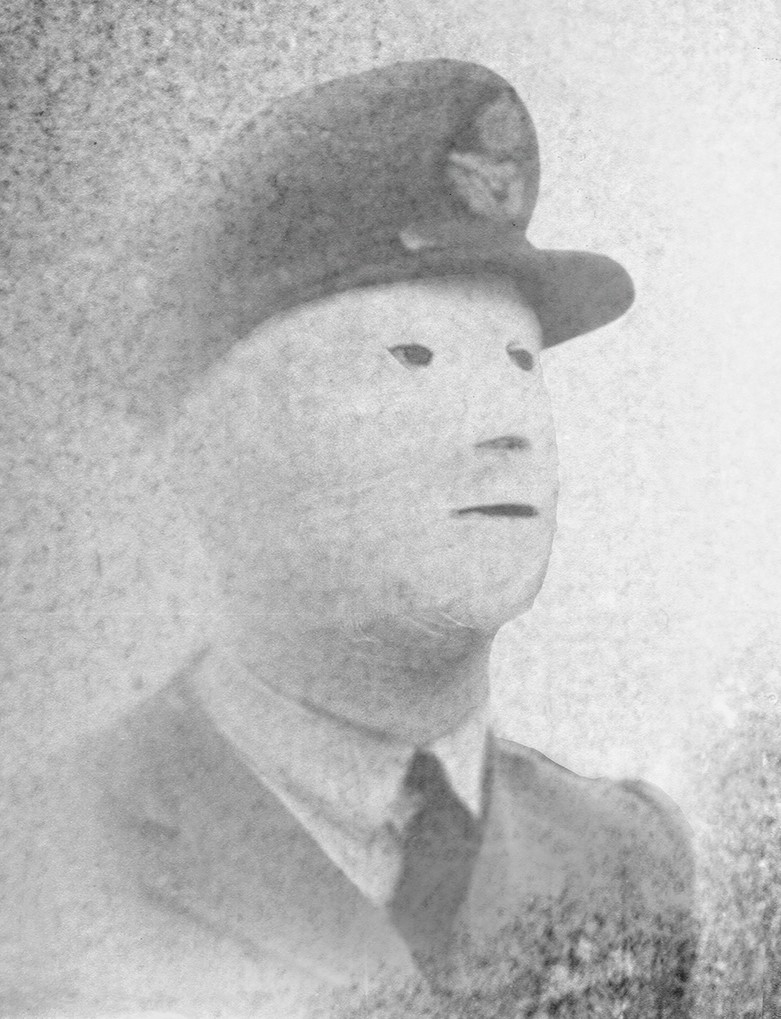
Meanwhile, McIndoe worked wonders. While it was largely up to family and friends to help the young men come to terms with their new faces, McIndoe also worked to find ways to assist in the reintegration of patients in normal life. Very few men were invalided out of the service. Many found non-flying jobs as controllers, intelligence officers, adjutants and the like. Others, however, sought and were allowed to return to full flying duties. Hilary, Page and Doe all returned to full operational flying. Hilary was killed in action in January 1943. Page and Doe both rose to the rank of Wing Commander and survived the war. Below, pictures of all three after their surgery.

Richard Hilary 1942


Wing Commander Doe 1943


Wing Commander Page (second from left) 1944


A Stranger in the Mirror tells the story of a pilot shot down in flames in September 1940. Not only is his face burned beyond recognition, he is told he will never fly again. While Dr McIndoe recreates his face one painful operation at a time, the 22-year-old pilot must discover who he really is. Although fictional, the novella draws heavily on autobiographical accounts of Hilary, Page and Doe in describing his treatment and physical recovery.

Buy Now!


A Stranger in the Mirror is one of three tales included in Grounded Eagles. Find out more at: https://crossseaspress.com/grounded-eagles


Friday, September 24, 2021

British and American Women Pilots in WWII

 The Second World War was the first in which women played a role in aviation. Russian women flew combat missions as bomber and fighter pilots, but in Great Britain and the United States the role of women pilots was supportive rather than direct. The similarities and contrasts between the British and American experience are, however, striking. Below is a summary taken from my comparative study published 15 years ago. 


 American woman pilot in the cockpit of a B-17 (above)

(Photo courtesy of the National Archives, Washington, No 342-FH-4A05339)

An British woman pilot preparing to fly a Spitfire (below)  

(Photo courtesy of Diana Barnato Walker)


In the U.K. women flew with the Air Transport Auxiliary (ATA), which was founded almost immediately after the start of WWII by senior executives of British Overseas Airways Corporation (BOAC) to employ pilots not fit for military service in supporting roles for the RAF and Fleet Air Arm (FAA). Although it became the sole ferrying organization of the British armed forces, it responded flexibly to other requests and also provided air ambulance, VIP transport and cargo service on an ad hoc basis.

From the start, the ATA was an organization dedicated to providing services, not proving a point, and it was open to both men and women. Indeed, through out its existence, men pilots out-numbered women pilots by a significant margin. For example, the first pilots of the organization were 30 men and 8 women. At it’s peak in 1944, the ATA employed nearly 700 pilots of which only a little over 100 were women. (Source: The Forgotten Pilots. Lettice Curtis (who was herself an ATA pilot). Appendix 1.)

In the United States, in contrast, women flew with the WAFS and/or WASP. Both of the organizations were established as women-only organizations, and the WASP was established more to demonstrate that women could be taught to fly as well as men as to fill any explicit need or shortage identified by the USAAF. Indeed, the USAAF consistently denied the need for training women pilots at all.

WASP in classroom training at Avenger Field in Sweetwater, TX (Photo courtesy of the National Archives, Washington, No 342-FH-4A05376)

The ATA was established by aviation professionals, and initially only accepted pilots with 500 hours of solo time. By the end of 1940, the needs of the organization were so great that the recruiting requirements were reduced to just 50 hours solo, and by 1942 the first candidates without any flying experience were accepted into the organization’s training program. The latter had started in 1941, when the reduction in flying hours required for application had been instituted. Pilots with just 50 hours solo needed additional training to fulfill the tasks assigned.

Rather than duplicating RAF or airline training, however, the ATA inventively developed a pilot training program designed to train pilots precisely for the tasks required by the ATA in a minimum amount of time. Pilots were first trained only on light, training aircraft and then put to work ferrying these aircraft to RAF training establishments. In doing the work, the pilots were already earning their keep, contributing directly to the war effort (relieving RAF pilots from ferrying), and also gaining flying time, experience and confidence.

An ATA pilot in a training aircraft. (Photo courtesy of Michael Fahie)

Once they had fully mastered these aircraft, the ATA pilots (whether men or women) advanced to more powerful single-engine aircraft including fighters, and step-by-step at their own pace to twin-engine aircraft and eventually heavy bombers. At no time were ATA pilots trained on aerobatics, air gunnery, formation flying or other military training irrelevant to ferrying and transport service. Indeed, they were given only minimal training on instrument flying, as ATA pilots were expected to fly “visual.” By keeping the topics of training to the minimum, training time was significantly reduced.

Furthermore, by allowing the pilots to progress at their own pace, no pilots were forced beyond their capabilities. There was no need for all pilots to qualify on all classes of aircraft, a policy that ensured all pilots contributed according to their abilities, reducing accidents and losses. Notably this training scheme was evolved and initially managed by some of the world's finest flying instructors -- instructors that had previously been with the British Overseas Airways Corporation (BOAC).

An British woman pilot in cockpit of a Sterling four-engine bomber (Photo courtesy of Maidenhead Heritage Centre)

The WASP, in contrast, singularly failed to develop a satisfying training program. Training was put in the hands of a civilian contractor of dubious quality, and two separate USAAF inspections of the WASP training facility identified and catalogued myriad inadequacies in the WASP training program, but no corrective actions were undertaken.

Furthermore, the contractor responsible for training rigidly and mindlessly followed the standard USAAF training program (probably at the insistence of the WASP leadership or the USAAF itself). As a result, American women pilot-candidates were subjected to a lengthy course cluttered with utterly superfluous training elements such as mathematics, aerobatics, and use of the Norton Bomb Site -- although no one ever envisaged the women graduates serving as bombadiers on USAAF combat missions.

Above WASP training on the bombsite (Photo courtesy of the National Archives, Washington, No 342-FH-4A05355)

At great expense to the American taxpayer, the WASP training institution at Avenger Field in Texas turned out pilots who on graduation had their wings yet still needed further training before they could contribute to the war effort. Thus while British women pilots were contributing to the war effort after only a few months, the WASP pilots took nine to ten months just to earn their wings. At that point, they still needed specialized training on service aircraft. "Pursuit" training was four weeks long, B-26 training nine weeks and B-17 training twelve weeks long. In short, even the best women pilots were in training for a year or more before starting to contribute to the war effort.

However, because of the substandard level of training offered at Avenger Field, most graduates failed to live up to expectations, fueling rather than diminishing existing prejudices against the concept of women military pilots. Overall, only a tiny percentage of the 1,074 women who passed through WASP training saw active service in any capacity before the decision was made to disband the organization altogether.

WASP pilot and copilot in the cockpit of a B-17 (Photo courtesy of the National Archives, Washington, No 342-FH-4A05519)

PLEASE NOTE! I am NOT suggesting that the American women were in any way inherently less capable or less dedicated than the British women. On the contrary, many American women flew very successfully with the ATA. Women pilots on both sides of the Atlantic consistently demonstrated high levels of competence at least equal to that of male pilots of comparable experience. Indeed, their service record with respect to patience and reliability was notably better than that of male pilots. The women in both countries demonstrated that women could fly the most modern aircraft of their age, (including the first jets in the UK), and their flying safety record was above average in both the U.K. and the U.S.

However, in the course of the war, the women with the ATA steadily won the same privileges and status as their male counterparts. They wore the same uniforms, underwent the same training at the same centralized flying school, and performed the same duties as their male colleagues as they qualified successively on the classes of aircraft from training bi-planes to four-engine bombers. From 1943 onwards, they broke ground by being awarded equal pay for equal work at a time when other women's auxiliaries (such as the Women's Auxiliary Air Force (WAAF)) were not. Last but not least, women in the ATA were promoted on merit and could exercise command authority over male colleagues.

Women pilots of the ATA (Photo courtesy of Ann Wood Kelly)

The American women pilots, in contrast, were segregated in an exclusively women's organization. They trained separately at a training base set up exclusively for them and managed, as noted above, by a sub-standard civilian contractor. Even on completing training, they were expressly denied the same uniform, status, rank, privileges, pay and benefits of male pilots engaged in the same activities — whether ferrying aircraft, towing targets or gliders. (The male pilots were all members of the USAAF.) Indeed, the WASP were not even entitled to disability, pension or death benefits in the event of an accident, resulting in the absurd situation in which women killed in the same aircraft as male crew members were denied the military honors accorded the men who had died with them. Separate is NOT equal!

The illusion of militarization: they could march, but not get a pension, disability or military funeral. (Photo courtesy of the National Archives, Washington, No 342-FH-4A05676)

Throughout the war, the women in the ATA were recognized and praised both officially and publicly for their contribution to the war effort. Five women and 31 male ATA pilots won the MBE. Four women ATA pilots and two male colleagues earned the BEM. One woman Flight Captain received a Commendation alongside five male ATA officers, and two women ATA pilots along with 16 male ATA pilots received the King’s Commendation for Valuable Service in the Air.

The WASP, in contrast, were first glamorized and then demonized. The women could not and did not receive any form or honors. On the contrary, they were sent home before the war was even over, and treated like an embarrassment by the government and nation that had recruited them.

Even more shocking, because of the incompetence of the WASP management, women were sometimes left without pay for months on end. Members were arbitrarily shifted from one assignment to another, preventing the women from gaining experience, competence and confidence in any particular job. They had no uniform for most of their existence, and when a uniform was eventually issued, it highlighted their "otherness" rather than furthering integration and acceptance by the USAAF.

Worst of all, however, the real contributions of competent women pilots were over-shadowed by the bureaucratic back-biting and games played by the WASP leadership. Even USAAF commanders who valued the contributions of individual American women pilots, viewed the organization as a headache. When the WASP became the target of a hostile Congressional investigation, the women pilots found few supporters and so the WASP was rapidly scrapped because it had become a public embarrassment.

A comprehensive comparison of the experiences of women pilots in the U.S. and the U.K. was the subject of my book Sisters in Arms: The Women who Flew in WWII [Pen & Sword, 2006]

Sisters in Arms: British & American Women Pilots During World War II by [Helena Page Schrader]

 Buy Now!

Friday, September 17, 2021

Footnote to History: The German Aristocracy and the Resistance to Hitler

 One curious feature of the German Resistance to Hitler as the disproportionately high number or aristocrats involved.  Today I reflect on why.


Peter Count Yorck von Wartenberg

The German aristocracy was disproportionately well represented in the military resistance and conspiracy against Hitler.  For example, the most famous would-be assassin was Claus Count Stauffenberg.  Others who volunteered for suicide-attacks against Hitler were Axel Baron von dem Bussche, Georg Baron von Boeselager, and Rudolf-Christoph Baron von Gersdorff — to name just a few.  Counts Moltke and Yorck von Wartenburg, and Count Schulenburg were important civilian figures in the conspiracy. Many lesser noblemen were also highly significant figures, for example Henning von Tresckow and Carl-Heinrich von Stülpnagel.  I could list literally hundreds of German aristocrats who were members of the Resistance.

 
Helmut James Count Moltke

The question is: Why was the German aristocracy so prominent in the Resistance?  There were two factors:

First, the only resistance group with a chance of successfully bringing down the Nazi regime was that group that controlled some degree of force —i.e. could command troops, had access to explosives and the apparatus of government. This meant the officer corps of the army. While the Communists and Socialists, while staunchly anti-Hilter, they also had a pacifist tradition and so were hardly represented in the Officer Corps at all. In contrast, the aristocracy had for generations been the very backbone of the German officer corps.

Thus the aristocracy dominated the military resistance, that strand of the resistance that made the assassination attempts and carried out the coup attempt.

The second reason for the prominence of the German aristocracy in the German resistance is more subtle but no less significant. In the first half of the last century, the aristocracy in Germany firmly believed that a title of nobility brought with it an obligation to lead and to take responsibility for the fate of the nation.  

While Socialist and Communist resistance groups depended on organizations and were thus largely helpless once their organizations were shattered by the Nazis, the aristocracy’s resistance was individual.  The majority of those who had formerly voted for the leftist parties became disoriented once these parties were banned and so they were often co-opted by Hitlers early successes—by jobs, higher standards of living, victory.  

The aristocracy, in contrast, saw the need to rescue the nation from misgovernment as their hereditary duty—a personal obligation completely disconnected from party affiliation or the existence of an organization.

The German Resistance to Hitler was the subject of my PhD thesis. At the time I was the first Western academic granted access to some military archives and documents in what was then still "East Germany." In addition, I conducted interviews with over one hundred survivors of Nazi Germany, both supporters and opponents of the regime. The research culminated in a published dissertation and, later, an English-language biography of General Friederich Olbricht based on the dissertation. It also inspired me to write a novel about the German Resistance, which was recently re-released in ebook format under the title: "Traitors for the Sake of Humanity." Find out more and read reviews of "Traitors" at the publisher's website: Cross Seas Press.


Friday, September 3, 2021

Western Allied Response to the German Resistance

Although the German Resistance to Hitler was a loose conspiracy based on shared abhorrence of Hitler, his policies and his regime, they did not operate in a vacuum. Hitler's government started the most devastating war in human history and the three greatest powers on earth buried (at least temporarily) their differences in order to defeat Hitler's Germany. At various times, members of the German military resistance sought to establish contact with the Western allies -- and it wasn't all about getting a "better deal" than "Unconditional Surrender." 

Tragically, no one was listening.

The German anti-Nazis who attempted to kill Hitler and topple his regime on July 20, 1944 made various attempts to inform the Western Allies of their existence and get assurances that, if they succeeded in removing Hitler and establishing an interim government, the Western Allies would negotiate with them.  The first such attempt was made in the lead-up to the Sudeten Crisis in 1938.  Via the Vatican, the British government was informed about the possibility of a coup to prevent Hitler from invading the Sudetenland. However, the British government was not interested in aiding German generals against Hitler, and at that time even preferred Hitler to a government run, even temporarily, by the German General Staff.  It was a tragic misjudgment.

In the lull between the invasion of Poland and the start of the offensive in the West, one member of the Resistance, Hans Oster, warned the Dutch of the impending violation of Dutch neutrality—a move that has made him very controversial in Germany to this day.  But the Dutch didn't take the warnings seriously and were caught off guard despite the warning.

Hans Oster

Later, the Allies were far too committed to Stalin to think of seriously negotiating with a post-Hitler government.  In consequence, they responded to all overtures with non-committal answers.  Some members of the conspiracy hoped nevertheless that once they had killed Hitler and seized power — i.e. had proved their effectiveness and presented the Allies with a concrete opportunity to stop the loss of life in the West — they might be able to effect at least a ceasefire in the West. Some of the conspirators were willing to open the Western Front to the Anglo-Americans and invite them into Berlin while holding the Russian Front. 

The German Resistance to Hitler was the subject of my PhD thesis. At the time I was the first Western academic granted access to some military archives and documents in what was then still "East Germany." In addition, I conducted interviews with over one hundred survivors of Nazi Germany, both supporters and opponents of the regime. The research culminated in a published dissertation and, later, an English-language biography of General Friederich Olbricht based on the dissertation. It also inspired me to write a novel about the German Resistance, which was recently re-released in ebook format under the title: "Traitors for the Sake of Humanity." Find out more and read reviews of "Traitors" at the publisher's website: Cross Seas Press.


Friday, August 27, 2021

The Fate of Western Civilization in the Balance

 The fate of Britain -- and indeed the entire civilized world -- hung in the balance in the critical three weeks between the launch of the German air offensive on August 12/13 and the shift in German strategy to London on September 7. Although many now dismiss the actions of the RAF and view British victory as "inevitable," this judgement based on the wisdom of hindsight denigrates the sacrifices and the demeans the accomplishments of those who fought the Battle of Britain.

At a conference of Luftwaffe commanders on August 19, the destruction of the RAF’s defensive capacity was recognized as the priority, short-term objective. To achieve this goal, when operations resumed in force on August 24, the Luftwaffe employed a variety of tactics which it varied rapidly and unpredictably to keep the RAF guessing and try to catch it off guard.

Large and small bombing raids were interspersed with fighter sweeps. Diving bombing, high-altitude and low-altitude bombing were used separately or in combined attacks. Raids were launched in the early hours of the morning, mid-day and in the evening. Sometimes the Luftwaffe struck at widely separated times and on other occasions struck at short intervals in an attempt to saturate defenses. Raids were made on widely separated targets to try to spread the RAF thin. Or, alternatively, raids were made on the same target in quick succession.

On the one hand, the Luftwaffe tried to catch fighters on the ground refueling and, on the other, to force the RAF into the air to fight with the Me109s. To achieve the latter, the Luftwaffe now and again deployed Me110s in formations to look like bombers protected by hundreds of their smaller comrades. The Luftwaffe also tried cumbersome massive raids, in one case with over 400 fighter escorts, and it tried small raids by fighter-bombers without escorts. It experimented with large formations that then split into two, three or even four smaller raids attacking widely separated targets.

Although in retrospect it is evident that many of these raids were far from effective, others were devastating. In general, the frequency and ferocity of these attacks and the much more focused targeting of RAF Fighter Command made them extremely dangerous to Britain’s air defences. Altogether 32 attacks against airfields were made in just 14 days.

On the very first day of the renewed offensive, the satellite field of RAF Manston was hit twice, taking out its communications. Bomb craters and unexploded bombs littered field and the accommodations became unusable. Park made the decision, which pilots operating from Manston felt was belated, to write the field off except for emergencies. In short, the Luftwaffe scored a victory on its very first day of the renewed offensive.

But Manston was not a Sector Airfield with an all-important Sector Operations Room. Attacks on the Sector Stations were far more dangerous attacks, and there were 22 of these between August 24 and September 6. Of these, ten raids were directed at Biggin Hill. The second of these, a low-level attack by fighter-bombers, left the Sergeants’ and the WAAF quarters destroyed along with the NAAFI and cook-house, the stores, workshops and one of the hangers. A direct hit on an air-raid shelter killed 39 airmen and women and other bombs disabled the telephone lines and disrupted the gas, water and electricity supply. Although the Sector Operations Room was unscathed, without electricity and telecommunications the controllers could not direct their squadrons. Hornchurch had to temporarily take control of Biggin Hill’s squadrons. And that was only the beginning.

On the following day, Biggin Hill was again hit twice, first by a high-level raid that did little damage, and then, at six in the evening, by another low-level raid. This raid promptly destroyed two of the three remaining hangars and, more importantly, knocked out the Operations Room. Kenley had to assume control of the Biggin Hill squadrons. Yet the next morning (September 1,) Biggin Hill was again deemed fully operational — until it was bombed yet again that evening. This time teams worked through the night to set up an emergency control room in a shop in the near-by village, and one of Biggin Hill’s squadrons was moved to the satellite airfield of Croydon. The Station Commander also took the radical decision to blow-up his remaining hangar in an effort to discourage further raids. In short, the Luftwaffe had achieved a partial victory.

Meanwhile, Hornchurch had been hit four times, Debden three times, North Weald twice, and Kenley once. In addition, the Luftwaffe had devoted some raids to attacks on aircraft factories, twice targeting Hawker Hurricane production, albeit unsuccessfully. It had also undertaken a series of concentrated attacks on Portsmouth. British civilian casualties in this period rose to their highest of the war so far, causing Prime Minister Churchill increasing concern.

With the wisdom of hindsight, historians have argued that none of this was really so terrible. They point out that the Luftwaffe continued to waste much of its effort on airfields not associated with Fighter Command (14 raids altogether) and on satellite airfields (6 raids). There has also been much written about how bomb craters and unexploded bombs don’t really render an airfield inoperable (or not for long). Likewise, damage to hangars, workshops, accommodations and other facilities have also been disparaged as “insignificant” to fighting capacity. I beg to differ.

AVM Park writing on September 12, 1940 noted that:

There was a critical period between 28 August and 5 September when the damage to Sector Stations and our ground organization was having a serious effect on the fighting efficiency of the fighter squadrons, who could not be given the same good technical and administrative service as previous. [Source: Stephen Bungay, The Most Dangerous Enemy: A History of the Battle of Britain, London: Aurum Press, 2000. 290]

Park was employing the then-common “British understatement.” First-hand accounts of the conditions under which airmen were living and working and pilots fighting leave little doubt that the impact on “efficiency” and morale was becoming severe. Squadrons were being asked to fly three to four times a day. Yet many pilots were no longer getting regular, hot meals or able to sleep in proper accommodations. Many were being forced to live off station, commuting substantial distances that thereby reduced the time available for sleep. A few more weeks of this treatment might have resulted in a different outcome. Men were reaching the breaking point as the increasing casualties underline.

Although the Luftwaffe was still losing more aircraft than the RAF, the margin had narrowed dramatically. In this two week period, 380 Luftwaffe machines were lost for 286 RAF fighters. The RAF was losing more than 140 fighters per week. At that rate, even Beaverbrook was hard pressed to keep pace, and one effective strike on a Hurricane or Spitfire factory would have wiped out the ability of the British aircraft industry to replace losses in a timely fashion.

More critical, of course, were the pilot losses that simply could not be replaced in a short space of time. By the end of August 1940, RAF Training Command was “producing” pilots with nominal training on operational fighter aircraft at a rate of 280 per month. Casualties in August, however, had been 348 pilots. The training infrastructure was not keeping up with demand.

That was not a situation that could be reversed by a change in policy or priorities. It took roughly one year to train a young man to fly monoplane fighter aircraft; there were no short-cuts or means of speeding up “production.” Volunteers from Coastal Command and the Fleet Air Arm had already been exhausted. Furthermore, turning that pilot into an effective fighter pilot took more than time — it took experience. Inexperienced pilots had a six-times higher chance of being killed than an experienced pilot. Many replacement pilots did not survive their first sortie; many more did not survive their first week.

The same was true of inexperienced squadrons. In squadrons with experienced leaders, fledgling pilots got advice, guidance and support from their more-savvy comrades. When entire squadrons without recent front-line experience were rotated into 11 Group, there were no leaders who could warn, coach and protect their charges and slaughters occurred in which six or seven aircraft were shot down in a single engagement often with the loss of several pilots. Some squadrons all but ceased to exist within a week.

But the Germans didn’t know any of this.

The Germans relied on aerial reconnaissance and the combat reports of their own pilots. As we have seen, Luftwaffe fighter pilots overestimated their victories by huge margins, while the Luftwaffe staff severely underestimated the capacity of the British industry to produce replacement aircraft. At the end of the first week of September, the Luftwaffe was again convinced that the British could have no more than 200 Spitfires and Hurricanes left.

Meanwhile, the quality of high-altitude photo reconnaissance was still quite low. It was not always possible to tell what kind of aircraft were on an airfield, let alone the extent of damage. Furthermore, the damage that threatened Fighter Command most severely — electricity and telecommunications cuts to the Operations Rooms and radar stations — were virtually impossible to detect from the recce photos. The destruction of buildings on the other hand was easily recorded and looked very impressive, even if the immediate impact was far less damaging to the RAF’s ability to keep fighting. It is hardly surprising, therefore, that the Luftwaffe continued to believe that they were winning the air war against Britain.

What was starting to worry the Luftwaffe leadership, however, were their own losses. The Luftwaffe was starting to notice that it could not replace aircraft as fast as it as losing them. Some squadrons had only 50% of official aircraft strength. Serviceability rates were also down, as low as 75% in fighter squadrons. As with the British, however, the bigger problem was pilots.

While the number of fighter pilots killed on both sides was roughly equal, RAF pilots who were wounded or simply had to bail out of damaged aircraft usually landed in Britain and found themselves either in hospital or back with their units in a short space of time. The wounded usually made their way back into a cockpit within a period of weeks or months. Even in the case of severe burns, many pilots returned to flying duties after dozens of operations and plastic surgery. For the Luftwaffe, the situation was different. Because the fighting was taking place in British airspace, pilots unable to nurse a damaged aircraft across the Channel put it down in England — and became prisoners of war. Likewise, pilots who had to bail out for one reason or another became prisoners. Thus, the RAF’s pilot losses amounted to the number of pilots killed, while the Luftwaffe’s pilot losses consisted of those killed and captured.

Meanwhile, the Luftwaffe was feeling the exhaustion too. Because the Me 110 had proved ineffective, the Me109s were being asked to fly three to four sorties a day on average and as much as six or seven on some occasions. These were not short interceptions as in the case of the RAF. A Luftwaffe fighter sortie entailed a long flight across the lethal Channel — and back. Furthermore, the Luftwaffe had no system for rotating squadrons out of the front line as the RAF did. This meant that the Luftwaffe squadrons had all been engaged continuously since the start of the Battle of Britain, and often before that in the Battle of France.

In addition, in the fighter units the culture of rewarding kills resulted in the “experts” (the aces) winning medals and promotions — and receiving protection in the from of wingmen and “staff flights,” while everyone else took the casualties. This fact was increasingly resented.

Yet even more shattering to morale in fighter units was the tendency of the Luftwaffe leadership, including Goering himself, to blame the fighters for the continued attrition among the bombers. The fighter pilots knew they were giving their best, but it wasn’t enough either to destroy those “last 200 Spitfires” or to get all the bombers safely home.

If morale was starting to crumble in the ranks of the Luftwaffe’s fighter pilots, the bomber crews faced the same slow but steady erosion of elan that British and American bomber crews would learn about in the years to come. A psychiatrist specialized in battle fatigue noted after studying soldiers in both world wars that courage was like having money in a bank account: the reserves of even the bravest men could be drawn down to nothing, if demands were made upon it too often and too soon.  This was happening to the Luftwaffe in 1940.

The final straw for Luftwaffe morale, however, was the absence of a powerful incentive. The men and women of RAF Fighter Command, whether flying or supporting those who did, understood that they were fighting (in the words of Winston Churchill) “a monstrous tyranny” and even more importantly (again in Churchill’s words) for “the survival of Christian civilization,” and “our own British life.” But the men in the Luftwaffe knew that no one had particularly wanted to fight Great Britain in the first place! Those that had read Mein Kampf even knew that Hitler admired the British and the British Empire. Why on earth were they being asked to die?

Despite the successes the Luftwaffe believed they had achieved, the Luftwaffe leadership recognized that their crews were tired and did not want more of the same. Goering wanted something new, some trick, some clever new tactic that would at last “crack” the nut he firmly believed was ripe. 

Goering also needed to restore his standing in Hitler’s eyes. He had promised to defeat the RAF in a couple of weeks and after two months the British were still not begging for peace talks. He had  joked that if the RAF ever bombed Berlin, people could call him “Meyer.” On August 25, the RAF  retaliated for bombs dropped (accidentally) on London with a more-or-less harmless raid on Berlin. Goering was about to make the worst mistake of the Battle.

Where Eagles Never Flew opens with the Battle of France and goes on to show the Battle of Britain, in all its phases, from both sides of the Channel. It does so by following the fate of German characters as well as British ones. The British characters are members of the fictional No. 606 (Hurricane) Squadron based at Tangmere. The German characters are the pilots and women auxiliaries of a Me109 Gruppe based in Northern France.  Where Eagles Never Flew is the winner of the Hemingway Award for 20th Century Wartime Fiction, a Maincrest Media Award for Historical Fiction, and more. Find out more about Where Eagles Never Flew at:  https://crossseaspress.com/where-eagles-never-flew or watch a video teaser at: Eagles Video Teaser


 Buy Now!